• Home
  • About Us
  • Group Benefits
    • Group Health
    • Group Dental
    • Group Life
    • Group Disability
  • Individual Insurance
  • Carrier-Partners
  • Contact Us
  • Blog
  • Testimonials
Lubenow Agency
856-866-2020 or 908-272-1812

Governor Murphy Extends Grace Periods to 60-days

4/10/2020

2 Comments

 
Governor Murphy announced an executive order late yesterday afternoon that provides 60-day grace periods for both health and dental insurance payments. 
 
Claims must be paid during this time period and insurers cannot demand repayment of unpaid premiums in a lump sum at the end of the grace period. Unpaid premiums must be spread out over the remainder of the insurance term. 
 
The Commissioner of the Department of Banking and Insurance may extend these emergency grace periods further as necessary to protect the interests of policyholders, beneficiaries, and the public. Please note that this does not apply to self-funded plans as they are subject to federal, not state regulations. 
 
More information may be forthcoming from the insurance carriers in this regard.
To view the Order Click Here

2 Comments

CARES Act signed by President Trump on Friday, March 27, 2020

3/30/2020

1 Comment

 
As you probably already noticed, the President signed a $2 Trillion Stimulus bill on Friday, also called the CARES Act.

If you would like to review the entire bill, you can read the full 880 page text here.

Summary from Congress.gov is below:
This bill addresses economic impacts of, and otherwise responds to, the COVID-19 (coronavirus) outbreak.
The bill authorizes emergency loans to distressed businesses, including air carriers, and suspends certain aviation excise taxes.
With respect to small businesses, the bill:
  • establishes, and provides funding for, forgivable bridge loans; and
  • provides additional funding for grants and technical assistance.
The bill also provides funding for $1,200 tax rebates to individuals, with additional $500 payments per qualifying child. The rebate begins phasing out when incomes exceed $75,000 (or $150,000 for joint filers).
The bill establishes limits on requirements for employers to provide paid leave.
With respect to taxes, the bill:
  • establishes special rules for certain tax-favored withdrawals from retirement plans;
  • delays due dates for employer payroll taxes and estimated tax payments for corporations; and
  • revises other provisions, including those related to losses, charitable deductions, and business interest.
With respect to health care, the bill
  • provides additional funding for the prevention, diagnosis, and treatment of COVID-19;
  • limits liability for volunteer health care professionals;
  • prioritizes Food and Drug Administration (FDA) review of certain drugs;
  • allows emergency use of certain diagnostic tests that are not approved by the FDA;
  • expands health-insurance coverage for diagnostic testing and requires coverage for preventative services and vaccines;
  • revises other provisions, including those regarding the medical supply chain, the national stockpile, the health care workforce, the Healthy Start program, telehealth services, nutrition services, Medicare, and Medicaid.
With respect to education, the bill
  • temporarily suspends payments for federal student loans; and 
  • otherwise revises provisions related to campus-based aid, supplemental educational-opportunity grants, federal work-study, subsidized loans, Pell grants, and foreign institutions.
The bill also authorizes the Department of the Treasury to temporarily guarantee money-market funds.
1 Comment

NEW LAW ESTABLISHES CORONAVIRUS HEALTH INSURANCE AND EMPLOYEE LEAVE PROTECTIONS

3/20/2020

2 Comments

 
​The Families First Coronavirus Act (H.R. 6201) became law on March 19, 2020. This legislation will have a significant impact on private health insurance plans and the employee leave policies for almost every American business. It is the second major relief bill enacted so far to provide economic relief and aid related to the COVID-19 pandemic. Here is a summary of its major provisions:Health Insurance Coverage Requirements
  • All private individual and group health insurance providers must cover COVID-19 diagnostic testing, and they cannot apply any restrictions like prior authorization requirements when they do so.
  • The requirement applies to self-funded employer groups and grandfathered health plans, as well as all fully-insured individual and group major medical plans.
  • No out-of-pocket costs (deductibles, co-pays, coinsurance) can apply to COVID-19 diagnostic testing.
  • People do not have to pay out-of-pocket costs for any office visits, telehealth visits, emergency room visits, or urgent care visits associated with getting COVID-19 testing. They also do not have to meet any cost-sharing requirements for services they might get while determining if they have COVID-19, like an MRI.
Employee Leave Requirements
The law creates two new programs to assist employees who cannot work due to reasons related to COVID-19.
Emergency Sick Leave
  • This provision of the law applies to all entities that employ 500 people or less.
  • The emergency sick leave provisions require affected employers to provide paid sick leave to virtually all full and part-time employees who cannot work or telework for reasons related to coronavirus. Full-time employees get 80 hours of leave, and part-time employees get a pro-rated amount based on their average hours over a ten-day period.
  • Employers may exclude workers who are health care providers or emergency responders from the new leave benefits.
  • The Department of Labor may craft emergency regulations to exempt small companies with 50 or fewer employees if compliance threatens the ongoing viability of the business.
  • There are six reasons why an employee may take COVID-19 emergency sick leave:
    1. To respond to a federal, state or local quarantine order;
    2. To quarantine due to a request by a medical provider;
    3. To get coronavirus testing or treatment;
    4. To take care of family members ordered to quarantine;
    5. To care for children who cannot go to school or childcare due to coronavirus-related closures.
    6. If the employee has a related medical condition specified by the federal government.
  • COVID-19 emergency sick leave must be in addition to any other employee sick or paid leave, and employers cannot require employees to take the COVID-19 leave instead of any additional leave they may have available. Employers also cannot alter any existing sick leave policies after the enactment of this law to avoid full compliance.
  • The new emergency sick leave does not carry over, and if an employee needs to use less than ten days leave for reasons related to COVID-19, then the leave is capped at the amount required.
  • When calculating the amount of the sick leave payments, an employer must use the greater of the employee’s regular rate of pay or federal, state, or local minimum wage.  People who are taking the leave for reasons 1,2 and 3 must get 100 percent of this amount.  Employees who are taking leave for reasons 4, 5, and 6 must receive 2/3 of this amount.
  • This part of the law takes effect 15 days after enactment and expires on December 31, 2020.
Family Medical Leave Act (FMLA) Expansion
  • The new law makes temporary changes to the Family Medical Leave Act (FMLA) to address the coronavirus public health emergency.
  • The new FMLA provisions apply to businesses with 500 or fewer employees.
  • The Department of Labor is authorized to adopt emergency regulations to exempt employers with 50 or fewer employees who cannot comply for business viability reasons.
  • Affected employers must provide 12 weeks of leave to qualified employees with at least 30 days of service. The first ten days may be unpaid (employees may use other accrued paid leave if they wish). For the remaining ten weeks, employees must be paid at least 2/3 of their regular rate of pay up to a daily maximum of $200 ($10,000 aggregate over the ten weeks).
  • To qualify for the new FMLA leave, the employee must be unable to work or telework due to a need to care for a child who cannot go to school or a childcare arrangement because of COVID-19 protections. Employers may exclude workers who are health care providers or emergency responders from the new FMLA benefits.
  • The law also reduces penalty liability for employers with 50 or fewer employees. It stipulates that employers with 25 or fewer employees complying with this requirement do not have to guarantee job availability upon return to employees who take the COVID-19 FMLA leave.
  • This part of the law takes effect 15 days after enactment and expires on December 31, 2020.
Federal Assistance to Employers
  • To offset costs for the new emergency sick leave and FMLA requirements, applicable employers can claim a refundable tax credit against their portion of Social Security tax payments paid quarterly. If the amount of the tax credit exceeds the business’s total Social Security payment liability for a quarter, then the excess is refundable.
  • The maximum emergency sick leave tax credit is $511 per day per employee ($5110 aggregate) who is taking leave due to a personal COVID-19 quarantine order or to seek COVID-19 testing (qualifying reasons 1-3).  The maximum credit is $200 per day per employee ($2000 aggregate) taking leave to care for a family member who needs assistance due to COVID-19 quarantine, to care for a child that cannot go to school or child care, or if the employee has a related health condition specified by the federal government (qualifying reasons 4-6).
  • The maximum new FMLA tax credit is $200 per day per employee ($10,000 aggregate).
  • Self-employed individuals may also claim an emergency sick leave tax credit if they need to take up to ten days leave from their work for any of the six reasons outlined as qualifying reasons for emergency sick leave for employees.  They can claim 100 percent of the credit for leave due to a personal COVID-19 quarantine order or to seek COVID-19 testing (qualifying reasons 1-3) and 67 percent of the credit for leave to care for a family member who needs assistance due to COVID-19 quarantine, to care for a child that cannot go to school or child care, or if the employee has a related health condition specified by the federal government (qualifying reasons 4-6).
Unemployment Insurance
  • States will share in $1 billion of federal funding support for their unemployment assistance programs.
  • To qualify for the federal funding assistance, states will have to relax their eligibility criteria to make it easier for people who have lost jobs due to the pandemic get help immediately.
Other Key Provisions
  • The law requires all federal programs that provide people with health care and coverage to make COVID-19 testing available to participants with no required cost-sharing. These programs include Medicare, Medicare Advantage, Medicaid, the State Children’s Health Insurance Program, all sources of military and veteran’s coverage, and the Native American Health Services program.
  • It establishes a mechanism to ensure that all uninsured people can also access COVID-19 testing for free.
  • Modifications and expansions are made to nutritional programs for low-income people, children who receive school lunch assistance, and vulnerable senior citizens.
  • It gives health care providers additional workplace protections.
2 Comments

Warning Signals for Additional Rate Increases in NJ

6/19/2017

4 Comments

 
There was an article in Saturday's paper about the continued increases in individual health insurance premiums across the country, and the expectation that NJ will have a similar increase when Horizon & AmeriHealth (the only two carriers left in NJ for Individual Plans) file their 2018 rates later this month.  
As Washington works on health-insurance reform, it continues to be evident that change is required.  The current AHCA bill definitely has its own flaws, but something needs to be done soon to stabilize the individual market - these annual rate increases are just not sustainable.  

Healthy individuals will find it more and more difficult to pay health insurance premiums versus just paying the individual mandate penalty and rolling the dice with no insurance.  This places additional strain on the individual market, because the folks that are left needing insurance have to pay higher and higher premiums to offset the high claims cost... it's a death spiral of costs.

The ACA currently has an individual mandate penalty which is intended to pressure healthy people to buy insurance so they can avoid the mandate penalty.  The AHCA is proposing to remove the individual mandate penalty, and create a 30% premium penalty in the future when the individual decides to sign-up for individual health insurance, after not having continuous coverage.  The net goal is similar - trying to keep everyone (healthy & unhealthy) covered on health insurance and paying premiums to offset the overall claims costs.

Unfortunately, both the Individual Mandate Penalty and the Continuous Coverage proposal will not fix the overall costs problem.  The main driver behind these insurance increases is the astronomical increases on backend healthcare costs - Hospitals, Prescription Drugs, and other costs are just out of control.

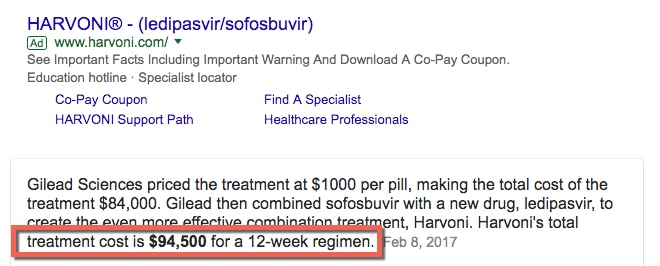
Next time you are watching television and you see an ad for Prescription Drug, you should google "retail cost of drug-name".  A couple popular ad's we see a lot of these days are for Harvoni and Humira.
Picture
Most people don't realize that the retail cost of an 8-week treatment of HARVONI is $90,000+. Google "retail cost of Harvoni"
Picture

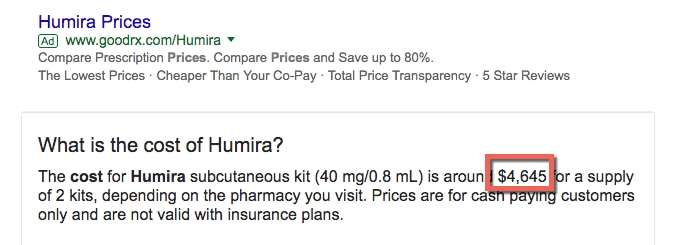
Another popular commercial we see frequently is for HUMIRA.

​
Picture
Most people don't realize that a month supply of Humira is over $4,000. Also Humira generally treates chronic conditions (like Chrone's disease), which means this is a drug that you could take for years/lifetime.   Google "retail cost of Humira".  ​
Picture

​These are just two brief examples.  Next time you are watching TV and see a commercial for a prescription drug - google the retail the price... you will be shocked what you find!


If you have a gold or platinum-level plan with first dollar coverage, you may have no idea the actual costs of the services or drugs you are consuming since the insurance company is paying these bills.

If you have a high-deductible plan, you may have some concept of these costs, but only until you meet the deductible on your plan... then, the insurance company is paying these bills.

When the actuaries at the insurance companies look to create their premiums for the upcoming year, the claims costs are the main driver for the continued increases in premiums.  We can fiddle with individual mandates and continuous coverage requirements (which are still important for stability), but until we address these backend issues - don't expect a reduction in premium increases.​

I look forward to Washington finding solutions to address these types of out-of-control backend health care costs, which is the only way we will get overall healthcare spending under control.
4 Comments

NAHU Capitol Conference

2/29/2016

3 Comments

 
Picture
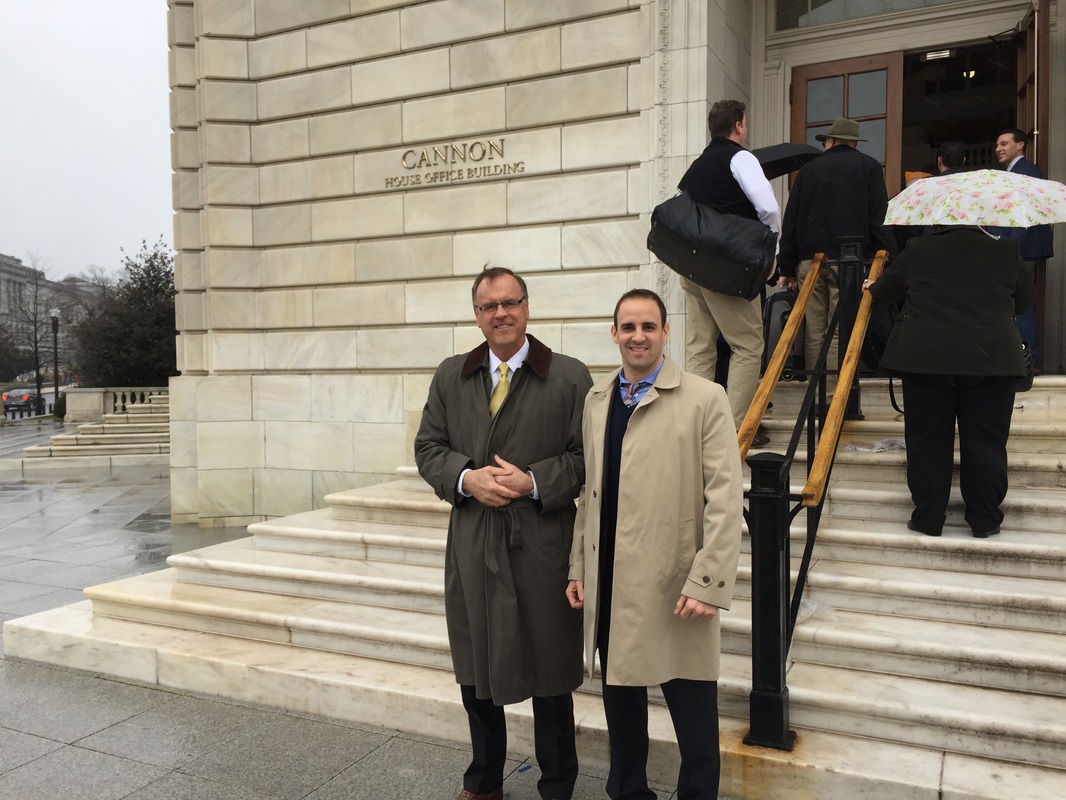
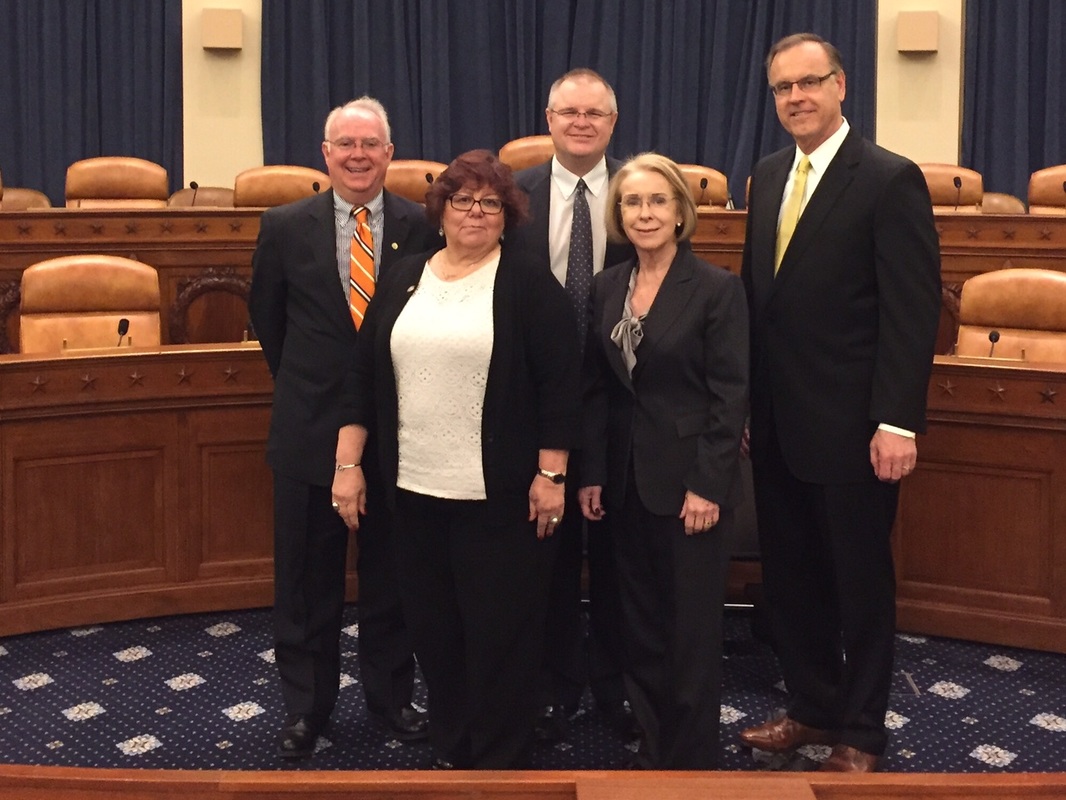
Doug & Justin Lubenow outside the Cannon building before the meeting with Congressman MacArthur.
Picture
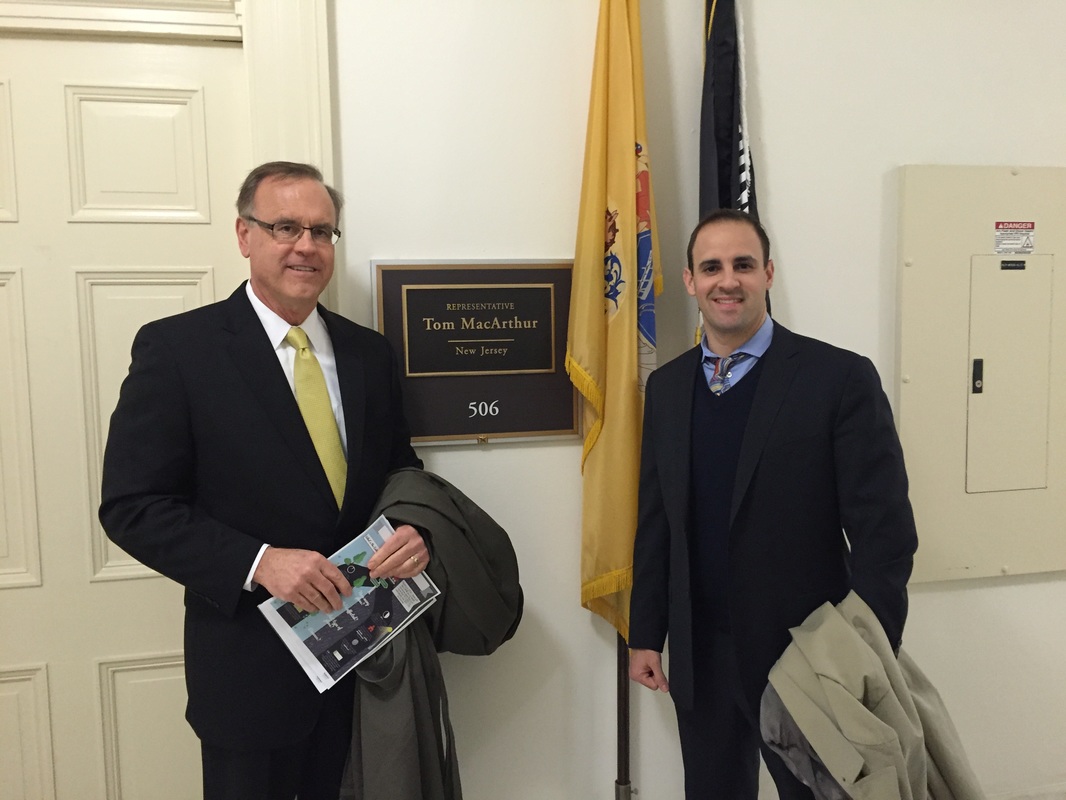
Doug & Justin Lubenow outside Congressman MacArthur's office before our meeting.
​Last week was the Capitol Conference in Washington D.C. for the National Association of Health Underwriters (NAHU). Doug is the only NAHU member from NJ that has been attending the Capitol Conference and lobbying on important issues for over 20 years!  This year, we had a great trip lobbying for several key legislation priorities with our Congressmen.
 
We think it is important to keep you informed of these activities so you are aware and can help lobby your local Congress People regarding these key topics.
 
NAHU has a list of 8 key legislation priorities that are the focus for 2016.  At Lubenow Agency, all of these issues are important, but we further prioritized the list to summarize the top two issues that we are pressing for our group client stakeholders.
Picture
The NAHU Medicare Advisory Group meets with the Ways & Means Committee.
  1. Employer Reporting – the ACA reporting requirements (e.g. 1094 and 1095 forms) for large groups, 50+ in NJ, present significant incremental administrative costs for employers.  Additionally the implementation of the subsidies on Healthcare.gov provides no validation that the individual is actually eligible for the subsidy at the time of enrollment.  This will result in certain individuals who received subsidies getting an unexpected tax bill later this year (if they should not have been eligible for a subsidy).  The bills mentioned below will help to address these Reporting issues.
    1. H.R. 2712 and S. 1996 address new challenges related to counting employees and complying with employer reporting requirements that impact both small and large employers.
  2. Cadillac Tax – This 40% tax on “Cadillac Plans” was one of the main funding mechanisms for the Affordable Care Act. It was anticipated to generate over $85 Billion.  There are several issues with this tax.  First, the Congressional Budget Office estimated 3/4 of the $91B in funds based on the assumptions that employers would reduce health benefits to avoid the tax, provide the health insurances savings back to employees in income, and thus the incremental income tax generated would be over $65B.  This is a huge assumption that is highly unlikely to occur to most cases.  The second major issue with the Cadillac Tax is the thresholds are ($29,100 for a family) too low for determining a Cadillac Plan… in NJ, the majority of plans have already crossed this threshold or will be crossing this threshold in the next couple of years.  This issue affected large Union Plans as well as Corporate Plans, so there seems to be bipartisan support.  Our goal is to repeal this Tax completely because the 40% penalty is too severe and will impact too many people.
    1. H.R. 879, H.R. 2050, S. 2045 and S. 2075 would permanently repeal the “Cadillac Tax,” which will impose a 40% excise tax on health plans that exceed certain cost thresholds beginning in 2020, following the two-year delay passed in December 2015.
 
 
If you have any questions about the pending legislation or getting involved to help support these key issues, let us know.
 
 
Best Regards,
 
Doug & Justin
3 Comments

Lubenow Agency launches new website Sept 8, 2015

9/8/2015

1 Comment

 
Picture

New Website Launched

Improved Look & Feel, Optimized Mobile Experience, Live Chat, and Private Exchange for Individual Insurance

Today, we unveil a new website at Lubenow-Agency.com.  It's not just a makeover—the new website is redesigned to give you faster, easier access to key information and provide a new Live Online Chat channel to contact us.
 
Here's a quick summary of some of the changes:
  • Private Exchange for Individual Insurance Plans (www.lubenowagency-exchange.com) 
  • Mobile responsive design for improved usability from your Smartphone
  • Live Online Chat with our available agents (offered Mon-Fri, 9am-5pm ET based on availability)
  • Testimonials and Reviews from our customers (we appreciate all the feedback thus far!)
  • A cleaner look and feel allows you to more easily discover our latest updates and information
 
The website refresh is one of the first steps in providing our customers with a modern experience and improved access to key information.
 
We plan to introduce more improvements in the coming months.

Click to check-out the new site: www.lubenowagency.com 

1 Comment

Operation Shout: Click "Take Action" Link below to help ease Employer Reporting Compliance for Health Insurance

8/14/2015

2 Comments

 
Picture
I have been lobbying for twenty years in Washington for health care reform to protect employers from mandates that affect the cost of health insurance. 

Below you will find details regarding a recent bill that has been posted to reduce employer reporting on the Affordable Care Act. 

We need sponsors to bring this to the Senate floor for a vote.  


If we can get this bill passed, it will make a significant difference in the reporting requirements that have been placed on businesses.

Please click the TAKE ACTION link below and complete the simple form (name, address, etc.).  It takes about three minutes to complete the form and it will be sent automatically to your Congressman and Senator asking them to sign on in support of this bill. 

DETAILS:
Last week, Senators Mark Warner (D-VA) and Rob Portman (R-OH) introduced S. 1996, the Commonsense Reporting Act of 2015. This followed Representatives Diane Black (R-TN-6) and Mike Thompson (D-CA-5) introduction of H.R. 2712 in June. These bills are in response to guidance released last year by the Department of the Treasury and the Internal Revenue Service (IRS) that detailed the reporting requirements under Section 6055 and 6056 for enforcement of the PPACA's individual and employer mandates.

In March 2014, the Department of the Treasury and the Internal Revenue Service (IRS) released final regulations on what health plan information all employers are required to report to the federal government annually for enforcement of both the health reform law's individual and employer mandates. Unfortunately, the final regulations are confusing and extremely complicated for businesses of all sizes.

H.R. 2712 and S. 1996 will ease the compliance reporting requirements for employers offering health insurance coverage to their employees. Specifically, the legislation would:

  • Establish a new voluntary reporting system for employers to report to the IRS information about their health plans. Exchanges will use the federal data hub to access this data for individual verification for tax credits.
  • Only employees (and/or their dependents) who access subsidized coverage through the exchanges would need to be reported to the IRS, greatly simplifying the requirement of all employees be reported.
  • Information that would be reported would include: name and employer identification, who has been extended an offer of minimum essential coverage, whether coverage meets minimum value and the affordability safe harbor, and months that coverage is available without waiting periods.
  • Allows employees to deliver reports to employees electronically without another consent form.
  • Instructs the Government Accountability Office to conduct a study on the notifications, HHS appeals process, and the prospective reporting system.
  • Requires HHS to review the most recent tax filing for individuals automatically reenrolled in exchange-based coverage and adjust their tax credits accordingly.
Take Action today! Please urge your member of Congress to cosponsor H.R. 2712 and Senators to support S. 1996! For more information on the employer reporting requirements, click here.


TAKE ACTION

2 Comments

What do all these mergers mean for me?

7/27/2015

1 Comment

 
Picture
Anthem's $48B acquisition of Cigna is a BIG deal for the insurance industry, but how does it impact each of us?  Well, it's too soon to tell for sure, but most of the analysts are indicating reduced carriers correlates to reduced competition, which is not great for the consumer.

It will take some time for this all to work its way through the system to fully understand the impacts.

1 Comment

    Doug Lubenow

    See bio on the author

    Archives

    April 2020
    March 2020
    June 2017
    February 2016
    September 2015
    August 2015
    July 2015

    Categories

    All

    RSS Feed

    Call Now: 1-856-866-2020 OR 1-908-272-1812

Locations

214 West Main Street, Suite 101
​Moorestown, NJ 08057
15 Alden Street Suite #8
​Cranford, NJ 07016

What Our Clients Are Saying


"Best service, professional and thorough
Lubenow Agency has provided medical, dental, long term disability, life and accidental death insurances to our company for many long years. Each year, prior to our renewal, we are shown the options, any changes in the benefits and the pricing applicable to the various choices. They are a highly experienced team with an excellent support staff. Our people often call them to inquire about their coverage if our management cannot answer their questions. This saves our company a lot of time. Many of us also have various personal life insurance policies with them. One time they even provided me an excel spreadsheet of my personal policies listing all the details that I requested, expiration date, coverage amounts, payment due dates, etc. Service doesn't get better than this! We highly recommend them."

Contact Us

Subscribe

Join our mailing list today!
Join Now